
What Is Power of Attorney?
A Power of Attorney (POA) is a legal document that gives the authority to someone else to manage a person’s affairs. Someone serving as a Power of Attorney has the legal authority to act for someone else in specific financial, health-related, or personal matters.
With a POA, an individual (the “principal“) can choose another person (the “agent” or “attorney-in-fact“) to make confident decisions on their behalf. When completing the paperwork, the Principal will provide the essential details about the agent and what actions they may take on behalf of the principal.
If you become incapacitated without designating an agent, a loved one or family member may need legal guardianship from a court to help with your affairs.
Definition
Uniform Power of Attorney Act (UPOAA) in Section 102(7) (page 7) defines power of attorney as:’
‘a writing or other record that grants authority to an agent to act in the place of the principal, whether or not the term power of attorney is used.”
Uniform Power of Attorney Act
The Uniform Power of Attorney Act, commonly known as the UPOAA, was enacted in 2006. The UPOAA was created by the Uniform Law Commission (ULC) in response to the need for a uniform and standardized set of laws governing the creation and scope of a power of attorney.
States That Have Enacted UPOAA
| State | Year Enacted | Bill |
|---|---|---|
| Alabama | 2011 | SB 53 |
| Arkansas | 2011 | SB 887 |
| Colorado | 2009 | HB 09-1198 |
| Connecticut | 2016 | Public Act No. 15-240 |
| Georgia | 2018 | House Bill 897 |
When to Use a Power of Attorney
Use a power of attorney when you:
- Are unable to manage your own affairs due to illness, injury, or absence
- Need someone to act on your behalf for financial or legal matters
- Want to ensure that your wishes are carried out in the event that you become incapacitated
- Want to appoint someone you trust to make important decisions for you
- Want to avoid court intervention in case of incapacity or disability
- Want to give someone the authority to make healthcare decisions on your behalf
- Want to delegate specific responsibilities to someone, such as managing your investments or paying bills
- Are planning for the possibility of future incapacity or disability.
Examples of When to Use
Here are some real-world examples of when a power of attorney might be used:
- A business owner may grant a power of attorney to a trusted employee to sign contracts or conduct financial transactions on behalf of the company when they are out of town or unavailable.
- An elderly person may grant a power of attorney to a family member or friend to help manage their finances or make medical decisions if they are unable to do so themselves.
- A military service member may grant a power of attorney to a spouse or trusted family member to handle their affairs while they are deployed overseas.
- A parent may grant a power of attorney to a babysitter or nanny to authorize medical treatment in case of an emergency while the child is in their care.
- A person purchasing a home may grant a power of attorney to someone they trust to execute closing documents if they are unable to attend the closing.
How to Get Power of Attorney
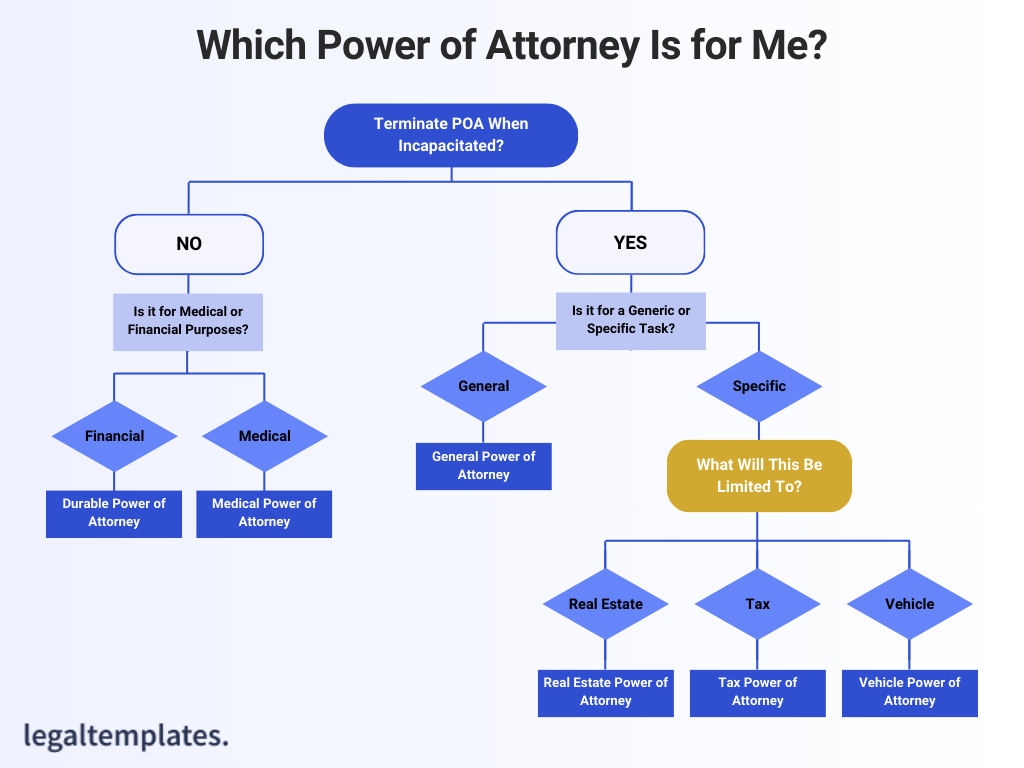
- Assess Your Needs as Principal
- Choose an Agent (or Attorney-in-Fact)
- Draft the Document
- Review State Laws
- Sign, Notarize, and Distribute Copies of the Document
Step 1 – Assess Your Needs as Principal
Deciding on the type of power of attorney depends on your individual needs and circumstances. Here’s how you might determine the right type:
- Assess your needs – Understand why you need a POA and what areas of your life it will cover (financial, medical, etc.).
- Consider the duration – Determine whether you must last indefinitely or only for a specific period.
- Check state laws – Your state’s laws might influence the type of POA you choose.
If you want someone to manage your financial affairs even if you become mentally incapacitated, you’ll want to use a durable power of attorney. It’s useful for long-term planning.
But if you need to appoint someone to make medical decisions on your behalf, if you’re unable to do so, you’ll want to use a medical one.
Step 2 – Choose an Agent (or Attorney-in-Fact)
Selecting an agent for your power of attorney is a pivotal decision. The foremost consideration should be trustworthiness; your agent must be someone you trust implicitly.
Alongside trust, capability is crucial. As a principal, you want to choose someone capable of handling the responsibilities of managing your affairs.
It’s also essential to ensure that the person is willing to take on your agent’s role. Their willingness to uphold your wishes, especially during challenging times, is necessary.
Step 3 – Draft the Document
Once you decide on the type you need, you’ll want to draft the document. Use an online form or hire a lawyer to draft the document outlining the powers granted to your agent.
Be clear and specific about the powers you grant and understand how you can revoke the power of attorney if needed. If it’s not durable, specify when it expires.
Also, designate alternate agents in case your first choice is unable to serve.
Step 4 – Review State Laws
Reviewing your state’s specific laws to ensure the document’s validity is imperative. Each state may have different requirements concerning notarization, witnessing, and the language used in the document.
This step ensures that the power of attorney is legally binding and will be honored by courts and institutions, safeguarding the principal’s interests and intentions as outlined in the document.
Step 5 – Sign, Notarize, and Distribute Copies of the Document
Once the document is completed, it is recommended, and sometimes mandatory, to have the form(s) signed in the presence of Witness(es), a notary public, or both. Check the signing laws in your state to learn what is required for your document to be fully executed and legally valid.
The witnessing process provides a level of assurance against fraud, affirming that it’s indeed you signing the document. Notarization further legitimizes it, as a notary public verifies your identity and willingness to sign.
After signing and notarizing the document, make sure to distribute copies to your agent, family members, and others who may need to know about the arrangement. All parties should keep copies of the completed form, and the original should be stored somewhere safe.
How to Sign as Power of Attorney
Once a Power of Attorney is effective, the agent can sign as power of attorney and make decisions on the principal’s behalf.
To have an agent use a general Financial POA, the principal must contact the third party (such as a bank) in advance and show the original signed form (or a certified copy) and the agent’s and principal’s IDs.
Once the agent has been confirmed or added to the account, they can sign for transactions as follows:
[Principal’s name]
by [Agent’s name]
Power of attorney
Some third parties may initially refuse the form if they’re worried about possible forgery. To proceed, the agent may need to sign an affidavit or have their lawyer contact the third party.
Suppose the principal is incapacitated and the POA is durable. In that case, the agent may need to provide additional documents from healthcare professionals that confirm the principal’s capacity before the agent can use the POA and sign on the principal’s behalf.
State Signing Requirements
 A Flourish map
| STATE | DURABLE | GENERAL | MEDICAL | MINOR (CHILD) | REAL ESTATE | TAX | VEHICLE |
|---|---|---|---|---|---|---|---|
| Alabama | Notary Public | Notary Public | Two Witnesses | Notary Public | Notary Public | Principal Only | Notary Public |
| Alaska | Notary Public | Notary Public | Notary Public | Notary Public or Two Witnesses | Notary Public | Principal Only | Notary Public |
| Arizona | Notary Public and One Witness | Notary Public and One Witness | Notary Public or One Witness | Notary Public and One Witness | Notary Public and One Witness | Principal Only | Notary Public |
| Arkansas | Notary Public | Notary Public | Notary Public and Two Witnesses | Notary Public | Notary Public | Principal Only | Principal Only |
| California | Notary Public or Two Witnesses | Notary Public or Two Witnesses | Notary Public or Two Witnesses | Notary Public or Two Witnesses | Notary Public or Two Witnesses | Principal Only | Principal Only |
How to Choose an Agent
Choosing the right agent is the best way to avoid risk with a Power of Attorney. Remember that you can select multiple agents for different tasks and assign responsibilities based on the agents’ strengths and character.
Many people choose a spouse as their agent. This can create problems for durable and medical powers of attorney if the spouse is similar to the principal, as they may also face age-related health challenges.
Naming adult children is a standard option because they will be younger, but this can create conflict when one sibling is given power of attorney, and another feels they’ve been mistreated. You should never name one of your children as your agent because of fairness if you lack trust in their ability to handle your affairs.
There are no specific qualifications, but choosing someone trustworthy and capable of serving as your agent is essential. Take these points into account when making your choice:
- Needs: The tasks you want to be entrusted to your agent must also be carefully considered. Would you require someone to take charge of your finances, be responsible for your healthcare decisions, or handle both?
- Reliability: This person will act with the same legal authority you would have to manage your financial and medical data, so it’s paramount that you select someone you trust.
- Availability: Make sure they’ll be able to help you when you need it most, so you should avoid those who are often out of town or have other obligations that might prevent them from stepping in for you.
How to Write a Power of Attorney Form
Follow these steps to learn how to write a Power of Attorney form using our general/financial template as an example, and complete all your paperwork by yourself without hiring a lawyer:
Step 1: Designate an Agent
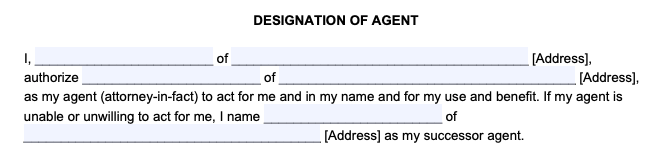
First, write your name and address at the top of the document (you are the principal). Then, write the name and address of the trusted individual you choose to be your agent/attorney-in-fact.
On this part of the form, you can also nominate a second person to be your agent if the first is unwilling or unable to fulfill their duties.
Step 2: Grant General Authority and Specific Authority
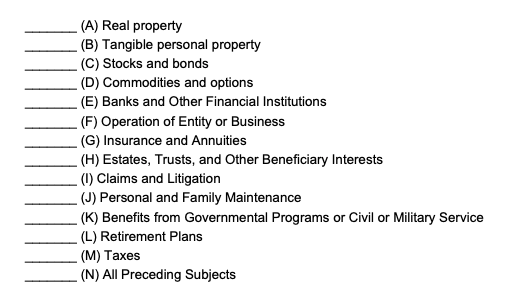
The second part of the document allows you to choose which powers you give your agent and decide which decisions they can make for you.
First, write your initials next to the subjects you’d like to give general authority over, allowing your agent to make overall decisions on your behalf:
Next, initial the subjects you’d like to give specific authority over. This means that your agent cannot handle these critical and sensitive affairs unless you initiate them here:
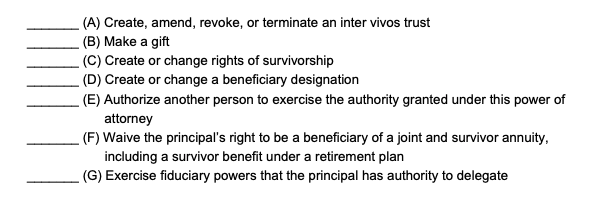
Underneath, you can also include special instructions. For example, you can explain how you want to limit the power you are giving to your agent.

Step 3: Set the Duration
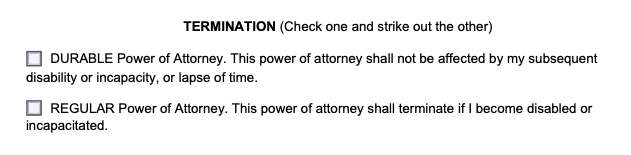
Our general/financial POA lets you decide whether the power of authority stops if you become incapacitated and unable to make decisions or if it continues after.
On the form under “Termination,” choose non-durable or durable POA:
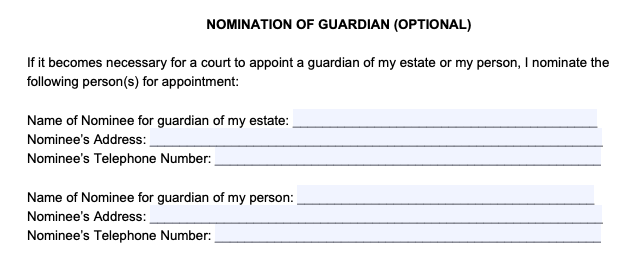
If a Power of Attorney is non-durable, you can also nominate a guardian in advance to handle your affairs if you become incapacitated. This step is unnecessary if the form is durable.
Step 4: Sign the Document
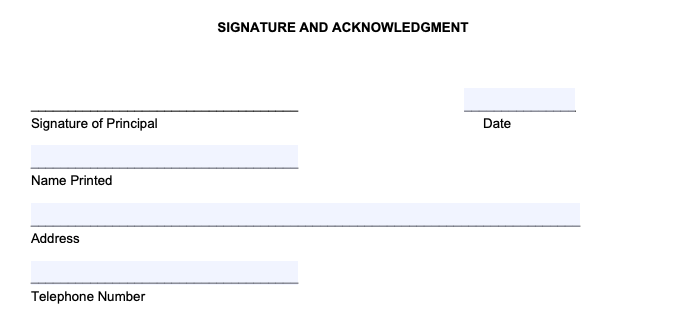
The final step is to sign and date your POA paperwork.
Depending on your state, your document may need to be signed by up to 2 witnesses and/or a notary. Make sure to check the complete signing requirements for your state. https://www.actec.org/assets/1/6/Douglass_Powers_of_Attorney_Survey.pdf?hssc=1 " aria-expanded="false" style="box-sizing: inherit; background-color: transparent; border: none; color: rgb(75, 98, 249); text-decoration: none; transition: all 0.15s ease-in-out 0s; font-size: 0.75rem; vertical-align: top;"[2]
How to Remove a Power of Attorney
Ending a power of attorney is just as important as creating one. There may be various reasons why someone would want to end their power of attorney, including the agent’s incapacity, the agent’s misconduct, or simply because the principal no longer needs assistance.
If you have decided to terminate, there are a few steps you need to follow:
Step 1: Revocation Notice
The first step is to download a Revocation template and provide a written revocation notice to your agent, indicating that you are revoking their power of attorney. The notice should include your name, date of birth, and the date of the previous power of attorney. It should also specify the reasons why you are revoking.
Step 2: Notify Third Parties
Once you have informed your agent, you should notify all third parties who have been relying on the power of attorney, such as banks or financial institutions. You should provide them with a copy of the revocation notice and inform them that the power of attorney is no longer valid.
Step 3: File the Revocation Notice
It is advisable to file the revocation notice with the court where the POA was originally filed. This will ensure that there is a record of the revocation, and it will prevent anyone from challenging the validity of the revocation later on.
Step 4: Create a New Power of Attorney
If you still need assistance, you can create a new POA with a different agent. Ensure to carefully choose your new agent and discuss your expectations and limitations with them.
Comments
0 comments
Please sign in to leave a comment.